Ask to shadow an officials crew at practice. Choose a first role, learn it under supervision and build from there. Buying a striped shirt is less useful than finding someone who can teach you.
One sport. Several ways to work it.
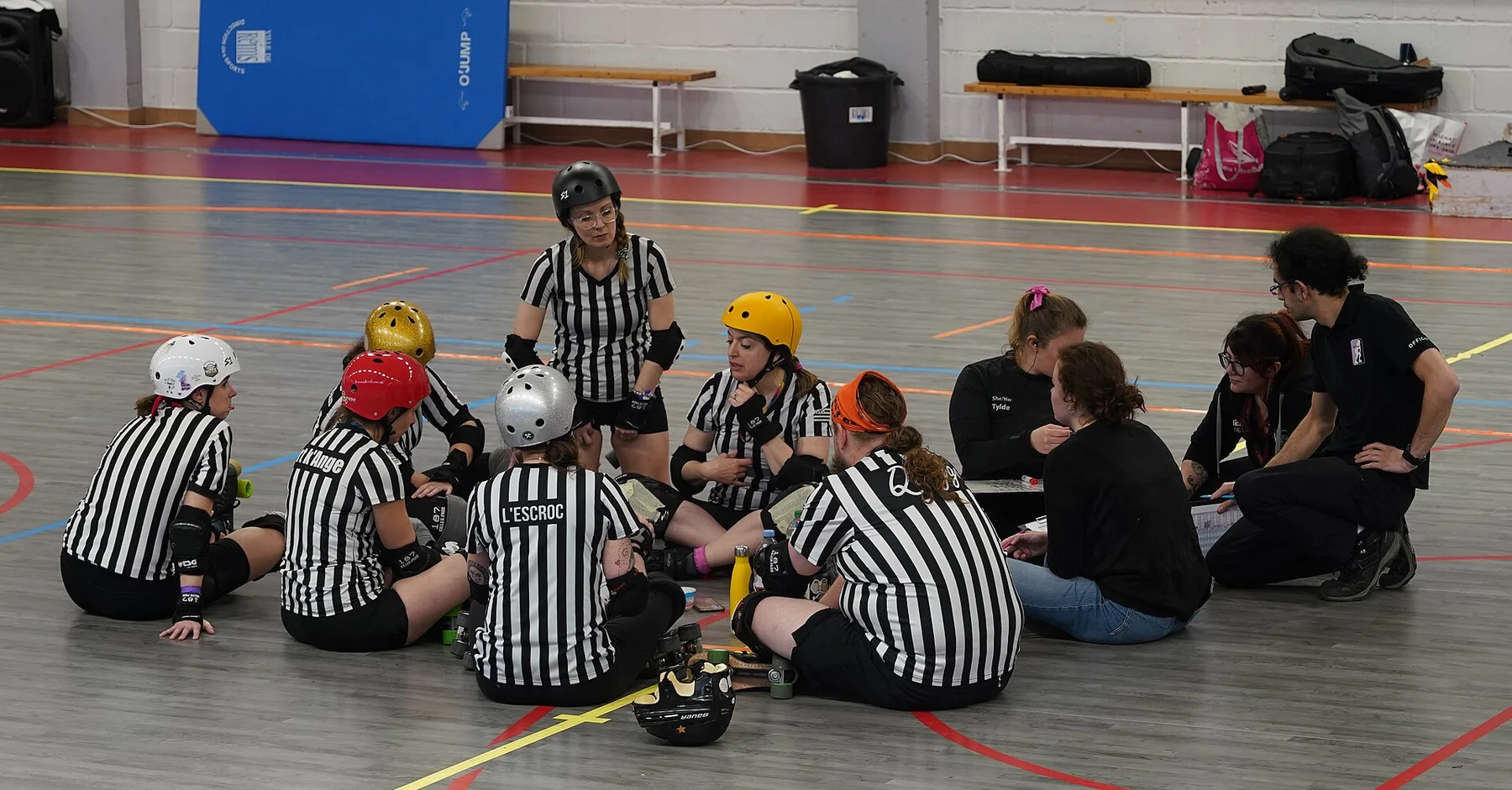
Skating officials observe gameplay, communicate calls and track scoring from their assigned positions. Non-skating officials help run the clocks, record the game, manage penalty timing and carry out other essential bout functions. The responsibilities are divided so one person is not trying to follow everything.
You do not have to become a contact skater before learning to officiate. Angel City explicitly invites people with no previous officiating knowledge. Its Parks & REFreation crew includes skating and non-skating routes. Windy City and Rose City also publish invitations for both.
If skating interests you but contact does not, explain that to the coordinator. Atlanta’s Academy describes a Bronze skating route connected to Ref School, without requiring an official to progress into contact levels.
Get close enough to learn the job.
Contact the officials coordinator and ask whether you can observe or shadow at a practice scrimmage. Give your availability and whether you skate. Ask what to read before coming, what to wear and whether there is a role they would like you to start learning.
Begin with one assignment and a named person you can ask for help. A game can make familiar words surprisingly specific: timing starts and stops under defined conditions, records use standard formats, and officials have established communication procedures.
Use the current WFTDA education and officiating resources alongside local instruction. Certification is a separate progression with its own requirements; this introductory guide is not a promise of certification or a shortcut to tournament staffing.
Ask about the ordinary weeks.
A bout is the visible part of the job. Find out how often the crew trains, which scrimmages you can attend, how game assignments are made and whether travel is expected. A monthly public game does not necessarily describe the whole schedule.
Clarify equipment, insurance and any dues for your route. Atlanta’s page describes waived Bronze dues for those attending Ref School, but that arrangement belongs to Atlanta. It is not a universal officiating policy.
Officials’ development involves feedback. Ask who will review your work and what materials the crew uses. A welcoming invitation becomes a useful learning route when somebody can explain the next practice, responsibility and source to study.
The bout also needs people outside the crew.
If officiating is not the job you want, ask about event setup, the door, merchandise, production or other volunteer tasks the league actually offers. Do not assume an unstaffed-looking area is permission to take over; get an assignment and a point of contact.
Be specific about a commitment you can keep. One confirmed shift is more useful than an enthusiastic promise to do every event. If you have a particular skill, say what you can deliver and when, rather than offering a vague “anything.”
The officials filter and volunteer filter surface leagues with those routes on the pages we checked. Absence from a filter is a gap in our source coverage, not proof a league would turn you away.
Go to the source.
Research and editorial explanation, not a report of attending these programs. Rules references use WFTDA 20250101. League arrangements can change; follow the current program page.